Blog

September 2025

Ipamorelin peptide guide — uses, handling & buying tips — HGH Peptides Lab

Ipamorelin Peptide Guide: Uses, Handling, Price & Buying Tips

Intro

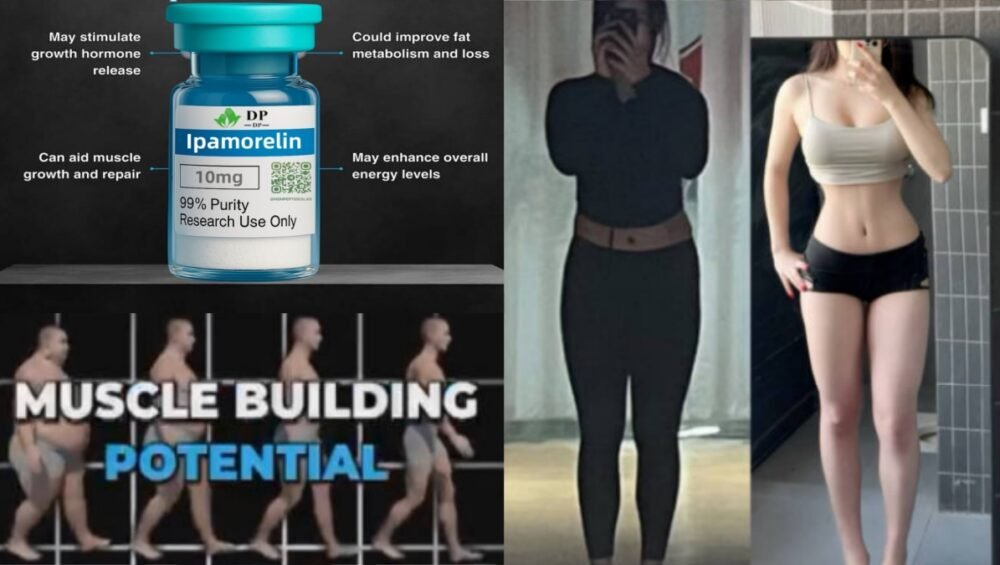
Ipamorelin is frequently discussed in growth-hormone (GH) axis research contexts as a selective GH secretagogue. This guide summarizes practical use cases, handling SOPs, and factory-direct buying tips from HGH Peptides Lab99% purity · engineered in China · pharmaceutical-grade.

Educational content for laboratory research only.


What Is Ipamorelin?

Ipamorelin is a pentapeptide GH secretagogue often referenced for its selective stimulation of GH release with comparatively minimal off-target signals in research models. It is typically supplied as a white lyophilized powder per vial and reconstituted with an appropriate sterile diluent before lab use.

Research-Context Use Cases

  • GH axis exploration — evaluate pulsatile GH release designs and downstream IGF-1 signaling frameworks.
  • Muscle & performance models — portfolio studies on lean mass markers and training recovery paradigms.
  • Body recomposition — investigate fat-mass vs. lean-mass endpoints in controlled designs.
  • Stacking with GHRH analogs — comparative/sequencing work with CJC-1295 (No DAC/With DAC) for combined GH dynamics.

Design & Handling Notes

  • Form: lyophilized peptide per vial.
  • Storage: 2–8 °C sealed; protect from light/moisture; minimize freeze–thaw cycles.
  • Reconstitution: add sterile diluent slowly along the vial wall; swirl gently — avoid vigorous shaking/foaming.
  • Fulfillment: orders generally ship within three (3) business days with tracking; secure, reliable packaging.

Reconstitution (SOP Sketch)

  1. Define target concentration and volume per vial to fit planned aliquots.
  2. Disinfect the stopper; use a sterile syringe with suitable diluent.
  3. Inject along the glass wall; gently roll/swirl until dissolved (do not shake).
  4. Label date/time and concentration; refrigerate and use promptly per lab SOPs.

Price & Buying Tips (Factory-Direct)

  1. Check kit math: mg/vial × vials/kit → compare per-vial & per-mg economics.
  2. Keep formats consistent: pick a single strength to simplify planning and reduce waste.
  3. Portfolio linkage: plan comparative or sequential designs with CJC-1295 (No DAC/With DAC) and document timing windows.
  4. Logistics: protective inserts + outer box; tracking number provided in ~3 business days.

FAQs

Q1. Can Ipamorelin be stacked with GHRH analogs?
A: It is commonly discussed alongside CJC-1295 (No DAC/With DAC) in portfolio-style research to explore combined GH dynamics.

Q2. Any handling cautions during reconstitution?
A: Add diluent slowly along the vial wall and avoid vigorous shaking/foaming. Plan aliquots to minimize freeze–thaw.

Q3. How fast is dispatch?
A: Orders generally ship within three (3) business days with tracking; packaging is designed for reliable transit.

Compliance

THIS PRODUCT IS INTENDED AS A RESEARCH CHEMICAL ONLY. ALL PRODUCTS ARE NOT LABELED.

Educational content for laboratory research only.
HGH (Human Growth Hormone) peptide guide — uses, handling & buying tips — HGH Peptides Lab

HGH (Human Growth Hormone) Guide: Uses, Handling, Price & Buying Tips

Intro

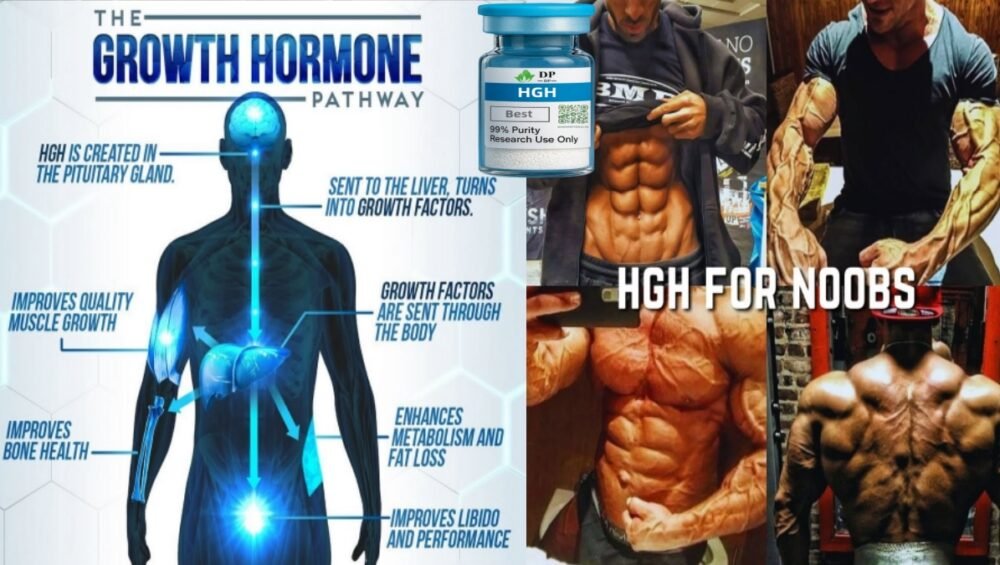
HGH (Human Growth Hormone, Somatropin) is frequently discussed in muscle growth and body-recomposition research contexts. This guide summarizes practical use cases, handling SOPs, and factory-direct buying tips from HGH Peptides Lab99% purity · engineered in China · pharmaceutical-grade.

Educational content for laboratory research only.


What Is HGH?

HGH (somatropin) is a recombinant polypeptide hormone used in research models exploring growth, protein synthesis, and metabolism. It is typically supplied as a white lyophilized powder per vial and reconstituted with an appropriate sterile diluent before use in lab settings.

Research-Context Use Cases

  • Lean mass & strength models — examine pathways related to muscle protein synthesis and performance.
  • Body recomposition & metabolism — investigate lipolysis and energy balance frameworks.
  • Recovery & connective tissue support — explore tissue remodeling and post-load recovery designs.
  • Adjacency with peptide stacks — compare or sequence with GH secretagogues in portfolio-style designs.

Design & Handling Notes

  • Form: lyophilized somatropin per vial.
  • Storage: 2–8 °C sealed; protect from light/moisture; minimize freeze–thaw cycles.
  • Reconstitution: add sterile diluent slowly along the vial wall; swirl gently — avoid vigorous shaking/foaming.
  • Fulfillment: orders generally ship within three (3) business days with tracking; secure, reliable packaging.

Reconstitution (SOP Sketch)

  1. Define target concentration and volume per vial to fit your protocol aliquots.
  2. Disinfect the stopper; use a sterile syringe with suitable diluent.
  3. Inject along the glass wall; gently roll/swirl until dissolved (do not shake).
  4. Label date/time and concentration; refrigerate and use promptly per lab SOPs.

Price & Buying Tips (Factory-Direct)

  1. Check kit math: strength (IU or mg) × vials/kit → compare per-vial & per-kit economics.
  2. IU↔mg mapping: confirm how IU relates to mg before comparing prices or planning doses in notebooks.
  3. Strength/format consistency: choose a single strength for simpler logistics and lower waste.
  4. Packaging & lead time: rigid inserts + outer box; tracking number provided in ~3 business days.

FAQs

Q1. What does “IU” mean vs “mg” on labels?
A: IU is a bioactivity-based unit; mg is mass. Suppliers may map IU to mg differently — confirm before comparing prices or planning protocols.

Q2. How should reconstituted solutions be stored?
A: Keep refrigerated and protected from light. Avoid repeated freeze–thaw and plan small aliquots to minimize handling.

Q3. Do you provide fast dispatch?
A: Orders generally ship within three (3) business days with tracking. Packaging is designed for reliable transit.

Compliance

THIS PRODUCT IS INTENDED AS A RESEARCH CHEMICAL ONLY. ALL PRODUCTS ARE NOT LABELED.

Educational content for laboratory research only.
LL-37 peptide guide — uses, handling, price & buying tips — HGH Peptides Lab

LL-37 Peptide Guide: Uses, Handling, Price & Buying Tips

Intro

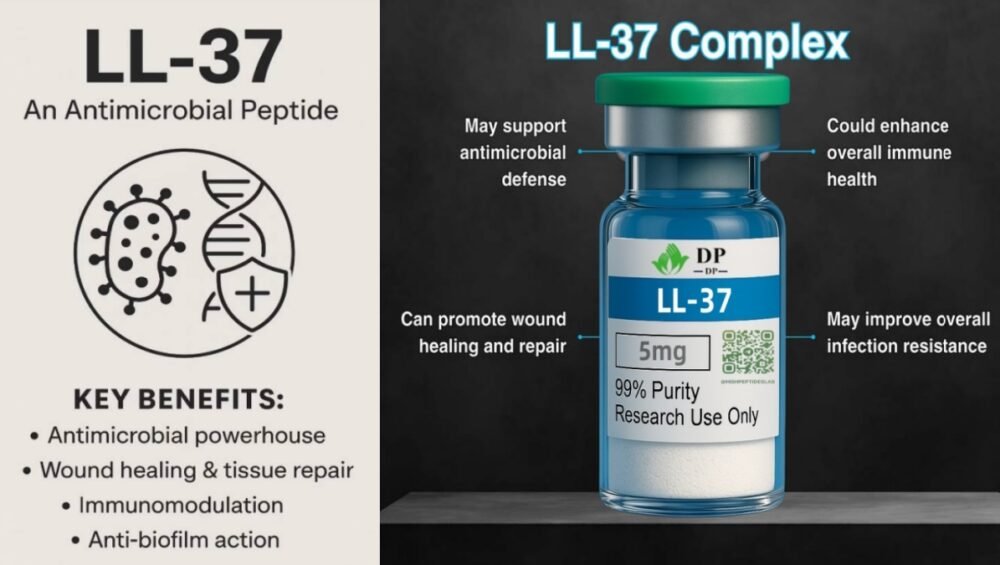
LL-37 is frequently discussed in immune and inflammation research contexts. This guide summarizes practical use themes, handling basics, and factory-direct buying tips from HGH Peptides Lab99% purity · engineered in China · pharmaceutical-grade.

Educational content for laboratory research only.

What Is LL-37?

LL-37 is a cathelicidin-family peptide often examined for innate-immunity and barrier-integrity frameworks. Readers review it in models that consider local tissue environments and microbial balance. It is typically supplied as a white lyophilized powder per vial.

Research-Context Use Cases

  • Barrier & local environment models — explored for epithelial balance, surface defense and recovery settings.
  • Inflammation discussions — examined in designs that compare local response under different conditions.
  • Portfolio planning — evaluated alongside Thymosin Alpha-1 and KPV in immune-theme lineups.

Design & Handling Notes

  • Form: lyophilized peptide per vial (program-dependent strengths).
  • Storage: 2–8 °C sealed; protect from light and moisture; minimize freeze–thaw.
  • Reconstitution: add a suitable diluent along the vial wall; swirl gently; avoid vigorous shaking.
  • Labeling: log molecule, mg/vial, date, diluent and prepared volume for reproducibility.
  • Fulfillment: orders generally ship within three (3) business days with tracking.

Price & Buying Tips (Factory-Direct)

  1. Check kit math: mg per vial × vials per kit → compare per-vial & per-kit price.
  2. Strength options: choose one strength for simpler inventory and planning.
  3. Packaging: secure inserts + protective outer box for stable transit.
  4. Product link: see our lab option — LL-37 — product page.

FAQs

Q1. How is LL-37 positioned vs other immune-theme peptides?
It’s discussed within innate-immunity and barrier-integrity frameworks; some readers compare it with Thymosin Alpha-1 or pair it with KPV in staged designs.

Q2. Lead time?
Orders generally dispatch within three business days with tracking.

Compliance

THIS PRODUCT IS INTENDED AS A RESEARCH CHEMICAL ONLY. ALL PRODUCTS ARE NOT LABELED.

Related Products

Cagrilintide peptide guide — uses, handling, price & buying tips — HGH Peptides Lab

Cagrilintide Peptide Guide: Uses, Handling, Price & Buying Tips

Intro

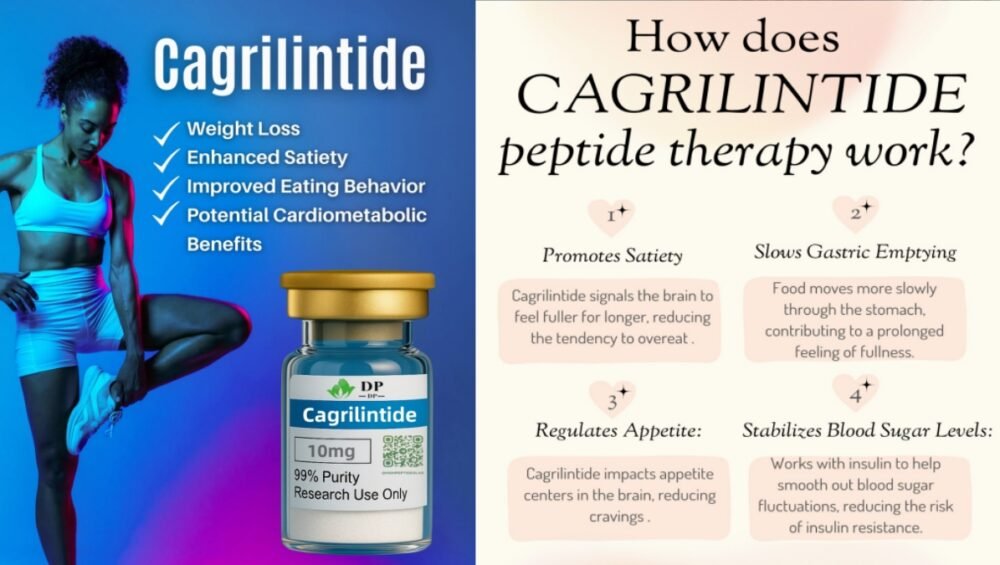
Cagrilintide is frequently discussed in weight-management research as a long-acting amylin analogue. This guide summarizes core use contexts, practical handling, and factory-direct buying tips from HGH Peptides Lab99% purity · engineered in China · pharmaceutical-grade.

Educational content for laboratory research only.

What Is Cagrilintide?

Cagrilintide is an amylin-analogue peptide examined for appetite and weight-balance research frameworks. Readers often review it both as a single agent and in combination designs with GLP-1 analogues for complementary themes. It is typically supplied as a white lyophilized powder per vial.

Research-Context Use Cases

  • Appetite & satiety models — explored for meal-size and frequency frameworks.
  • Weight-management designs — combined with caloric-intake protocols and activity plans in lab settings.
  • Stack planning — frequently discussed vs or with GLP-1 analogues such as Semaglutide.

Design & Handling Notes

  • Form: lyophilized peptide per vial (common strengths vary by program).
  • Storage: 2–8 °C sealed; protect from light and moisture; minimize freeze–thaw.
  • Reconstitution: add a suitable diluent along the vial wall; avoid vigorous shaking.
  • Labeling: log molecule, mg/vial, date, diluent, and volume prepared for reproducibility.
  • Fulfillment: orders generally ship within three (3) business days with tracking.

Price & Buying Tips (Factory-Direct)

  1. Check kit math: mg per vial × vials per kit → compare per-vial & per-kit price.
  2. Strength options: pick a single strength for simpler inventory and planning.
  3. Packaging: secure inserts and protective outer box for stable transit.
  4. Product link: see our lab option — Cagrilintide — product page.

FAQs

Q1. How is it positioned vs GLP-1 analogues?
It is discussed as an amylin-analogue approach; some readers also explore combination designs with GLP-1 (see Semaglutide link below).

Q2. Lead time?
Orders generally dispatch within three business days with tracking.

Compliance

THIS PRODUCT IS INTENDED AS A RESEARCH CHEMICAL ONLY. ALL PRODUCTS ARE NOT LABELED.

SNAP-8 peptide guide — uses, handling & buying tips — HGH Peptides Lab

SNAP-8 Peptide Guide: Uses, Handling, Price & Buying Tips

Intro

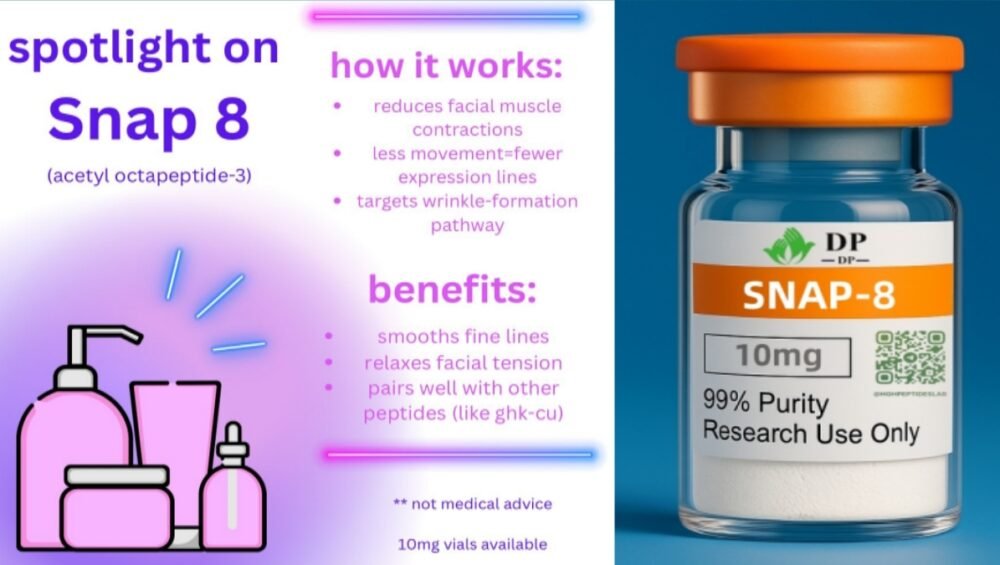
SNAP-8 is frequently discussed in cosmetic peptide research for expression-line and topical formulation models. This guide explains practical uses, handling basics, and how to buy with confidence from HGH Peptides Lab99% purity · engineered in China · pharmaceutical-grade.

Educational content for laboratory research only.

What Is SNAP-8?

SNAP-8 is a well-known cosmetic peptide discussed as an octapeptide used in topical-oriented research contexts. Readers often evaluate it alongside other cosmetic peptides for smooth-appearance frameworks and formulation design notes. It is typically supplied as a white lyophilized powder per vial.

Research-Context Use Cases

  • Expression-line models — frequently referenced in cosmetic formulation discussions.
  • Topical prototype design — explored with standard excipients, pH, osmolarity, and stability considerations.
  • Portfolio planning — often evaluated next to other cosmetic peptides to build tiered product lines.

Design & Handling Notes

  • Form: lyophilized peptide per vial (commonly 10 mg).
  • Storage: 2–8 °C sealed; protect from light and moisture; minimize freeze–thaw.
  • Reconstitution: use a suitable diluent; allow liquid to run along the vial wall; avoid vigorous shaking.
  • Labeling: keep records for molecule, mg/vial, date, and prepared volume for consistent SOPs.
  • Fulfillment: orders generally ship within three (3) business days with tracking.

Price & Buying Tips (Factory-Direct)

  1. Check kit math: mg per vial × vials per kit → compare per-vial & per-kit price.
  2. Strength: 10 mg per vial is common for inventory simplicity.
  3. Packaging: secure inserts and protective outer box for safe transit.
  4. Support: factory-direct account management for stable supply and after-sales.

Related Products

FAQs

Q1. What vial strengths are typical?
10 mg per vial is a common option for simple planning and kit math.

Q2. Lead time?
Orders generally dispatch within three business days with tracking.

Compliance

THIS PRODUCT IS INTENDED AS A RESEARCH CHEMICAL ONLY. ALL PRODUCTS ARE NOT LABELED.

Educational content only. Not medical advice.

BPC-157 vs TB-500: Differences, Research Uses, Handling & Buying Tips

BPC-157 vs TB-500: Differences, Research Uses, Handling & Buying Tips

Intro

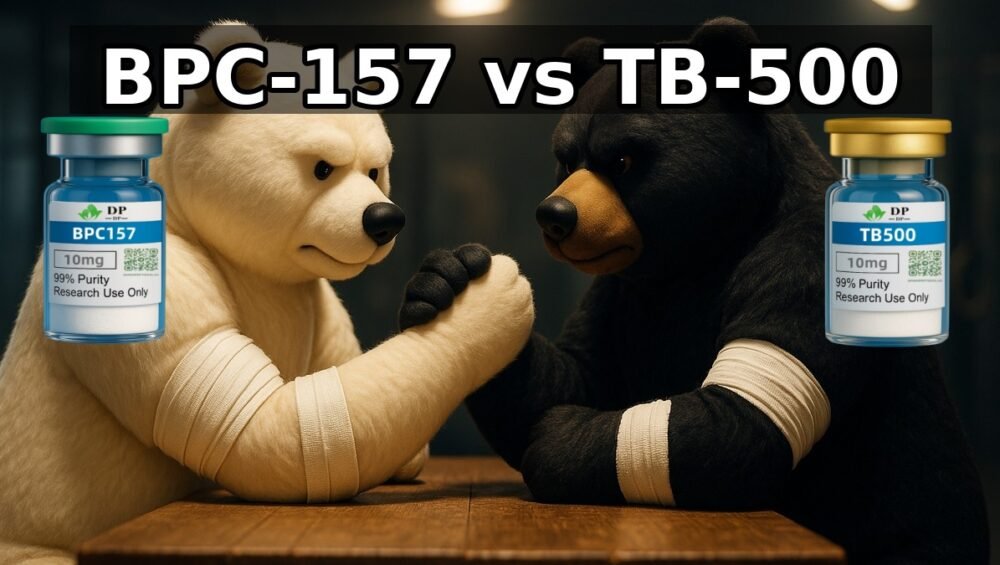
Comparing BPC-157 and TB-500 for research? This guide highlights practical differences, common discussion points, handling & storage basics, and buying tips. HGH Peptides Lab provides 99% purity · engineered in China · pharmaceutical-grade peptides with factory-direct pricing and steady logistics.

Educational content for laboratory research only. Not for human consumption or medical use.

What Are They?

  • BPC-157 — a synthetic 15-mer peptide discussed around soft-tissue and barrier integrity frameworks. Often referenced for tendon/ligament, joint & muscle, and GI-lining contexts in research commentary.
  • TB-500 — an active fragment from the thymosin-β4 family, often mentioned in cell-migration/angiogenesis-related pathways and muscle/fascia environments.

Key Differences (At a Glance)

DimensionBPC-157TB-500
Typical vial strengths2mg / 5mg / 10mg2mg / 5mg / 10mg
Research focus (commonly discussed)Soft-tissue/barrier, tendon & ligamentCell migration/angiogenesis, muscle/fascia
Reconstitution convenienceGenerally straightforwardEnsure thorough mixing
Typical working rangesEasily planned at 1–5 mg/mLCommonly 1–5 mg/mL
Stacking ideaPairs with TB-500 in some designsPairs with BPC-157 in some designs

Handling & Storage Basics

  • Form: white lyophilized powder per vial.
  • Storage: keep sealed at 2–8 °C; protect from light/moisture; minimize freeze–thaw.
  • Reconstitution: use a suitable diluent; let liquid run along the vial wall; avoid vigorous shaking.
  • Fulfillment: orders generally dispatch within three (3) business days with tracking.

Stack Considerations

Some readers design protocols that combine the two for complementary soft-tissue themes. If you want a step-by-step example for reconstitution math and labeling conventions, see the companion guide below.

Price & Buying Tips

  1. Do the kit math: mg per vial × vials per kit → compare per-vial and per-kit price.
  2. Check strengths: 2mg, 5mg and 10mg per vial are common.
  3. Packing & lead time: secure inserts and fast dispatch (~3 business days typical).
  4. Support: factory-direct channel for stable supply and quick after-sales.

Companion Guide (Stack/Reconstitution)

For exact reconstitution walk-throughs and a simple planning template, read the companion article: BPC-157 + TB-500 Stack Guide.

FAQs

Q1. Are 5mg and 10mg vials common?
Yes—2/5/10mg vials are typical for straightforward planning and inventory control.

Q2. What’s the usual lead time?
Orders generally ship within three business days with tracking.

Compliance

THIS PRODUCT IS INTENDED AS A RESEARCH CHEMICAL ONLY. ALL PRODUCTS ARE NOT LABELED.

Educational content only. Not medical advice.

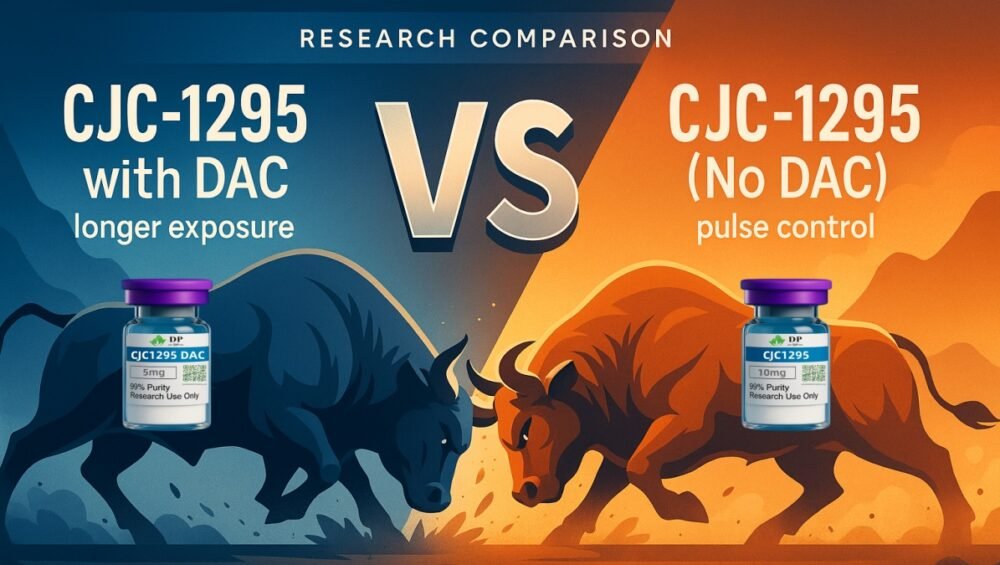
CJC-1295 with DAC vs CJC-1295 (No DAC) research comparison — longer exposure vs pulse control, two bulls and vials

CJC-1295 (No DAC) vs CJC-1295 with DAC (and Ipamorelin): How They Differ, When to Choose, Pricing & Stacks

Overview

This comparison shows how CJC-1295 (No DAC) differs from CJC-1295 with DAC, where Ipamorelin often fits in, and how buyers weigh timing, scheduling, and cost when choosing a research plan.

Educational content for laboratory research only. Not for human consumption or medical use.

No DAC vs DAC — Key Differences

AspectNo DACWith DAC
ExposureShorter-acting; tighter timing windowsProlonged exposure via DAC complex
Schedule styleSession-linked or periodized timingLower-frequency coverage
Typical pairingCommonly combined with IpamorelinOften used alone or with GHRPs as needed
Planning focusControl of pulse and windowConvenience and fewer timing events

Need a full primer on No DAC itself? Read the guide: CJC-1295 (No DAC) Peptide Guide.

When Buyers Choose Each

  • Choose No DAC if you want pulse-style control, session alignment, or night-time windows.
  • Choose DAC if you value longer coverage and fewer timing events.
  • Consider Ipamorelin with No DAC for the classic GHRH + GHRP pairing.

Stacks & Design Notes

  • No DAC + Ipamorelin: complementary approach (GHRH + GHRP) for timing-sensitive plans.
  • Labeling & logs: record timing, volume, and windows for reproducibility.
  • See also: site topics on Dosage & Timing and Mixing & Storage.

Handling & Storage

  • Form: lyophilized research peptides (typical sizes per vial).
  • Storage: 2–8 °C, dry & dark; avoid repeated freeze–thaw; shield from light.
  • Reconstitution: add diluent along the vial wall; swirl gently; use clean technique.

Pricing & Kits (Factory-Direct)

  • Compare per-mg cost across vial sizes and kits.
  • Check packaging (inserts, seals) and transit protection.
  • Factory-direct orders usually ship within three business days with tracking.

Compliance

THIS PRODUCT IS INTENDED AS A RESEARCH CHEMICAL ONLY. ALL PRODUCTS ARE NOT LABELED.

Educational content only. Not medical advice.

CJC-1295 (No DAC) peptide guide — differences vs DAC, handling & buying tips — HGH Peptides Lab (China)

CJC-1295 (No DAC) Peptide Guide: What It Is, Differences vs DAC, Handling & Buying Tips

Intro

Looking for a clear overview of CJC-1295 (No DAC)? This guide explains what it is, how it differs from CJC-1295 with DAC, where readers usually place it in GH/IGF research themes, and how to buy with confidence. HGH Peptides Lab supplies 99% purity, factory-direct peptides engineered in China with dependable logistics.

Educational content for laboratory research only. Not for human consumption or medical use.


What Is CJC-1295 (No DAC)?

CJC-1295 (No DAC) is a short-acting GHRH analog often chosen for designs that prefer pulsatile growth-hormone patterns and tighter on/off scheduling. It is typically supplied as a white lyophilized powder per vial (research grade).

Quick Differences vs CJC-1295 with DAC

  • Duration: No DAC is shorter-acting; DAC extends exposure via drug-affinity complexing.
  • Timing control: No DAC is often selected when tighter timing windows or session-based protocols are preferred.
  • Stack logic: Readers frequently pair No DAC with Ipamorelin for a GHRH + GHRP combination; DAC versions are sometimes used alone for longer coverage.
  • Planning: No DAC may be aligned to training periods or sleep timing; DAC favors lower-frequency schedules.

Want the side-by-side picture? See our companion comparison: CJC-1295 (No DAC) vs CJC-1295 with DAC.

Common Research Contexts (At a Glance)

  • GH/IGF axis discussions — periodized plans, response windows, session alignment.
  • Performance & composition topics — readers consider training-linked timing.
  • Sleep & recovery routines — alignment with night schedules is commonly discussed.

Design & Handling Notes

  • Form: Lyophilized peptide, typical research vials (e.g., 2–5 mg).
  • Storage: 2–8 °C, dry & dark; protect from moisture/light; minimize freeze–thaw.
  • Reconstitution: Use an appropriate diluent; let liquid run down the vial wall; swirl gently (avoid harsh agitation).
  • Labeling: Record molecule, batch/lot, mg per vial, date, and prepared volume for consistent lab practice.
  • Fulfillment: Factory-direct orders usually dispatch within three (3) business days with tracking.

Price & Buying Tips (Factory-Direct)

  1. Compare kit math: mg per vial × vials per kit → check per-mg cost and total landed price.
  2. Strength options: pick vial sizes that fit your planned volume and schedule.
  3. Packaging: look for secure inserts and tamper-evident seals for transit protection.
  4. Support: factory-direct channel helps ensure steady supply and responsive after-sales.

FAQs

Q1. Why choose No DAC instead of DAC?
Many readers prefer tighter timing windows or session-linked plans. No DAC supports this style with shorter exposure.

Q2. Common pairing?
A frequent combination is CJC-1295 (No DAC) + Ipamorelin (GHRH + GHRP concept). See the dual-blend kit.

Q3. Lead time?
Orders generally dispatch within three business days with tracking.

Conclusion

CJC-1295 (No DAC) suits projects that emphasize timing control and session alignment. If you need 99% purity, pharmaceutical-grade peptides with factory-direct pricing and steady logistics, explore our listings or message us for bulk support.

Compliance

THIS PRODUCT IS INTENDED AS A RESEARCH CHEMICAL ONLY. ALL PRODUCTS ARE NOT LABELED.

Educational content only. Not medical advice.

CJC-1295 With DAC peptide guide — uses, handling & buying tips — HGH Peptides Lab (China)

CJC-1295 With DAC Peptide Guide: What It Is, Uses, Handling & Buying Tips

Intro

Need a clear overview of CJC-1295 (with DAC) for research? This guide explains what it is, why the “with DAC” variant is often discussed, and how to handle and buy with confidence. HGH Peptides Lab provides 99% purity · engineered in China · pharmaceutical-grade peptides with factory-direct pricing and dependable logistics.

Educational content for laboratory research only. Not for human consumption or medical use.


What Is CJC-1295 (with DAC)?

CJC-1295 is commonly described as a GHRH-class analog (growth hormone secretagogue family). The “with DAC” notation refers to a Drug Affinity Complex discussed in literature for extending presence in circulation within research designs, compared with non-DAC variants.

Research-Context Use Cases (Plain English)

  • Performance & body-composition modeling — exploratory routines that study training load, recovery windows and soft-tissue maintenance.
  • Recovery/sleep window discussions — designs that observe timing, nighttime planning and rest quality in experimental setups.
  • Secretagogue comparisons — contrasting DAC vs. non-DAC, or GHRH-analogs vs. GHRPs, in lab frameworks.

How It’s Commonly Described

  • Presence: “with DAC” is often discussed for longer presence, while non-DAC (e.g., MOD-GRF 1-29) appears in shorter-window designs.
  • Pairings: readers sometimes compare or combine a GHRH-analog with a GHRP-class secretagogue in planning discussions (research context only).

Handling & Storage Notes

  • Form: lyophilized research peptide, commonly 2–5 mg per vial.
  • Storage: 2–8 °C, dry & dark; minimize freeze–thaw; protect from moisture/light.
  • Reconstitution: use a suitable diluent; let liquid roll down the vial wall; avoid vigorous shaking.
  • Labeling: record molecule, mg/vial, date, volume prepared; keep procedures consistent for repeatability.
  • Fulfillment: orders typically ship within three (3) business days with tracking.

Price & Buying Tips (Factory-Direct)

  1. Check strengths & kits: 2 mg / 5 mg are common; compare per-vial and per-kit math.
  2. Look for packaging: tight inserts + tamper-evident seals to protect lyophilized cakes.
  3. Consistency: stable supply, COA/HPLC support upon request, responsive after-sales.

FAQs

Q1. What does “with DAC” imply?
It denotes a Drug Affinity Complex discussed for extending presence in circulation in research models versus non-DAC analogs.

Q2. What vial strengths are typical?
2 mg and 5 mg per vial are common for straightforward planning and inventory control.

Q3. Lead time?
Orders generally dispatch within three business days with tracking.

Conclusion

CJC-1295 (with DAC) is a practical starting point for secretagogue-focused research themes. If you need 99% purity, pharmaceutical-grade peptides with factory-direct pricing and fast fulfillment, explore our listings or contact us for bulk support.

Compliance

THIS PRODUCT IS INTENDED AS A RESEARCH CHEMICAL ONLY. ALL PRODUCTS ARE NOT LABELED.

Educational content only. Not medical advice.

TB-500 peptide guide — research uses, handling & buying tips — HGH Peptides Lab (China)

TB-500 Peptide Guide: What It Is, Research Uses, Handling & Buying Tips

Intro

Looking for a clear TB-500 peptide guide for research? This page explains what TB-500 is, why readers discuss it for soft-tissue recovery, and how to buy confidently. HGH Peptides Lab provides 99% purity · engineered in China · pharmaceutical-grade peptides with factory-direct pricing and dependable logistics.

Educational content for laboratory research only. Not for human consumption or medical use.


What Is TB-500?

TB-500 is commonly described as a synthetic fragment related to Thymosin Beta-4, referenced in models that explore cell migration, micro-circulation, and tissue remodeling. In research settings it is typically supplied as a white lyophilized powder per vial.

Research-Context Use Cases (Simple Overview)

  • Tendon & ligament frameworks — overuse/strain models and mobility routines.
  • Joint & muscle recovery — load management, micro-tears, post-exercise study designs.
  • Soft-tissue & wound settings — local recovery and inflammation-pathway discussions.

How It’s Commonly Described (Quick Snapshot)

  • Context: often referenced with pathways of cell migration, angiogenesis, and matrix remodeling.
  • Stack idea: readers sometimes pair TB-500 with BPC-157 for complementary tendon/soft-tissue themes.

Design & Handling Notes

  • Form: lyophilized research peptide, commonly discussed at 5 mg or 10 mg per vial.
  • Storage: 2–8 °C, dry & dark; minimize freeze–thaw; protect from light/moisture.
  • Reconstitution: use a suitable diluent; let liquid run along the vial wall; avoid vigorous shaking.
  • Labeling: record molecule, mg/vial, date, and prepared volume — keep procedures consistent.
  • Fulfillment: orders generally ship within three (3) business days with tracking.

Price & Buying Tips (Factory-Direct)

  1. Do the kit math: mg per vial × vials per kit → compare per-vial & per-kit price.
  2. Check strengths: 5 mg & 10 mg options are common for simple planning.
  3. Packaging: secure inserts and clean handling for safe transit and storage.
  4. Support: factory-direct channel for steady supply and responsive after-sales.

FAQs

Q1. What vial strengths are popular?
5 mg and 10 mg per vial are most common for straightforward planning and inventory control.

Q2. Any stack recommendations?
Many readers explore BPC-157 with TB-500 for tendon/soft-tissue frameworks. See our dual-blend kit.

Q3. Lead time?
Orders generally dispatch within three business days with tracking.

Conclusion

TB-500 offers a practical starting point for soft-tissue recovery research themes. If you need 99% purity, pharmaceutical-grade peptides with factory-direct pricing and fast fulfillment, explore our listings or contact us for bulk support.

Compliance

THIS PRODUCT IS INTENDED AS A RESEARCH CHEMICAL ONLY. ALL PRODUCTS ARE NOT LABELED.

Educational content only. Not medical advice.

en_USEN
Select the fields to be shown. Others will be hidden. Drag and drop to rearrange the order.
  • Image
  • SKU
  • Rating
  • Price
  • Stock
  • Availability
  • Add to cart
  • Description
  • Content
  • Weight
  • Dimensions
  • Additional information
Click outside to hide the comparison bar
Compare
📞 Contact Us
Shopping cart close