Blog

Bodybuilder

CJC-1295 With DAC peptide guide — uses, handling & buying tips — HGH Peptides Lab (China)

CJC-1295 With DAC Peptide Guide: What It Is, Uses, Handling & Buying Tips

Intro

Need a clear overview of CJC-1295 (with DAC) for research? This guide explains what it is, why the “with DAC” variant is often discussed, and how to handle and buy with confidence. HGH Peptides Lab provides 99% purity · engineered in China · pharmaceutical-grade peptides with factory-direct pricing and dependable logistics.

Educational content for laboratory research only. Not for human consumption or medical use.


What Is CJC-1295 (with DAC)?

CJC-1295 is commonly described as a GHRH-class analog (growth hormone secretagogue family). The “with DAC” notation refers to a Drug Affinity Complex discussed in literature for extending presence in circulation within research designs, compared with non-DAC variants.

Research-Context Use Cases (Plain English)

  • Performance & body-composition modeling — exploratory routines that study training load, recovery windows and soft-tissue maintenance.
  • Recovery/sleep window discussions — designs that observe timing, nighttime planning and rest quality in experimental setups.
  • Secretagogue comparisons — contrasting DAC vs. non-DAC, or GHRH-analogs vs. GHRPs, in lab frameworks.

How It’s Commonly Described

  • Presence: “with DAC” is often discussed for longer presence, while non-DAC (e.g., MOD-GRF 1-29) appears in shorter-window designs.
  • Pairings: readers sometimes compare or combine a GHRH-analog with a GHRP-class secretagogue in planning discussions (research context only).

Handling & Storage Notes

  • Form: lyophilized research peptide, commonly 2–5 mg per vial.
  • Storage: 2–8 °C, dry & dark; minimize freeze–thaw; protect from moisture/light.
  • Reconstitution: use a suitable diluent; let liquid roll down the vial wall; avoid vigorous shaking.
  • Labeling: record molecule, mg/vial, date, volume prepared; keep procedures consistent for repeatability.
  • Fulfillment: orders typically ship within three (3) business days with tracking.

Price & Buying Tips (Factory-Direct)

  1. Check strengths & kits: 2 mg / 5 mg are common; compare per-vial and per-kit math.
  2. Look for packaging: tight inserts + tamper-evident seals to protect lyophilized cakes.
  3. Consistency: stable supply, COA/HPLC support upon request, responsive after-sales.

FAQs

Q1. What does “with DAC” imply?
It denotes a Drug Affinity Complex discussed for extending presence in circulation in research models versus non-DAC analogs.

Q2. What vial strengths are typical?
2 mg and 5 mg per vial are common for straightforward planning and inventory control.

Q3. Lead time?
Orders generally dispatch within three business days with tracking.

Conclusion

CJC-1295 (with DAC) is a practical starting point for secretagogue-focused research themes. If you need 99% purity, pharmaceutical-grade peptides with factory-direct pricing and fast fulfillment, explore our listings or contact us for bulk support.

Compliance

THIS PRODUCT IS INTENDED AS A RESEARCH CHEMICAL ONLY. ALL PRODUCTS ARE NOT LABELED.

Educational content only. Not medical advice.

TB-500 peptide guide — research uses, handling & buying tips — HGH Peptides Lab (China)

TB-500 Peptide Guide: What It Is, Research Uses, Handling & Buying Tips

Intro

Looking for a clear TB-500 peptide guide for research? This page explains what TB-500 is, why readers discuss it for soft-tissue recovery, and how to buy confidently. HGH Peptides Lab provides 99% purity · engineered in China · pharmaceutical-grade peptides with factory-direct pricing and dependable logistics.

Educational content for laboratory research only. Not for human consumption or medical use.


What Is TB-500?

TB-500 is commonly described as a synthetic fragment related to Thymosin Beta-4, referenced in models that explore cell migration, micro-circulation, and tissue remodeling. In research settings it is typically supplied as a white lyophilized powder per vial.

Research-Context Use Cases (Simple Overview)

  • Tendon & ligament frameworks — overuse/strain models and mobility routines.
  • Joint & muscle recovery — load management, micro-tears, post-exercise study designs.
  • Soft-tissue & wound settings — local recovery and inflammation-pathway discussions.

How It’s Commonly Described (Quick Snapshot)

  • Context: often referenced with pathways of cell migration, angiogenesis, and matrix remodeling.
  • Stack idea: readers sometimes pair TB-500 with BPC-157 for complementary tendon/soft-tissue themes.

Design & Handling Notes

  • Form: lyophilized research peptide, commonly discussed at 5 mg or 10 mg per vial.
  • Storage: 2–8 °C, dry & dark; minimize freeze–thaw; protect from light/moisture.
  • Reconstitution: use a suitable diluent; let liquid run along the vial wall; avoid vigorous shaking.
  • Labeling: record molecule, mg/vial, date, and prepared volume — keep procedures consistent.
  • Fulfillment: orders generally ship within three (3) business days with tracking.

Price & Buying Tips (Factory-Direct)

  1. Do the kit math: mg per vial × vials per kit → compare per-vial & per-kit price.
  2. Check strengths: 5 mg & 10 mg options are common for simple planning.
  3. Packaging: secure inserts and clean handling for safe transit and storage.
  4. Support: factory-direct channel for steady supply and responsive after-sales.

FAQs

Q1. What vial strengths are popular?
5 mg and 10 mg per vial are most common for straightforward planning and inventory control.

Q2. Any stack recommendations?
Many readers explore BPC-157 with TB-500 for tendon/soft-tissue frameworks. See our dual-blend kit.

Q3. Lead time?
Orders generally dispatch within three business days with tracking.

Conclusion

TB-500 offers a practical starting point for soft-tissue recovery research themes. If you need 99% purity, pharmaceutical-grade peptides with factory-direct pricing and fast fulfillment, explore our listings or contact us for bulk support.

Compliance

THIS PRODUCT IS INTENDED AS A RESEARCH CHEMICAL ONLY. ALL PRODUCTS ARE NOT LABELED.

Educational content only. Not medical advice.
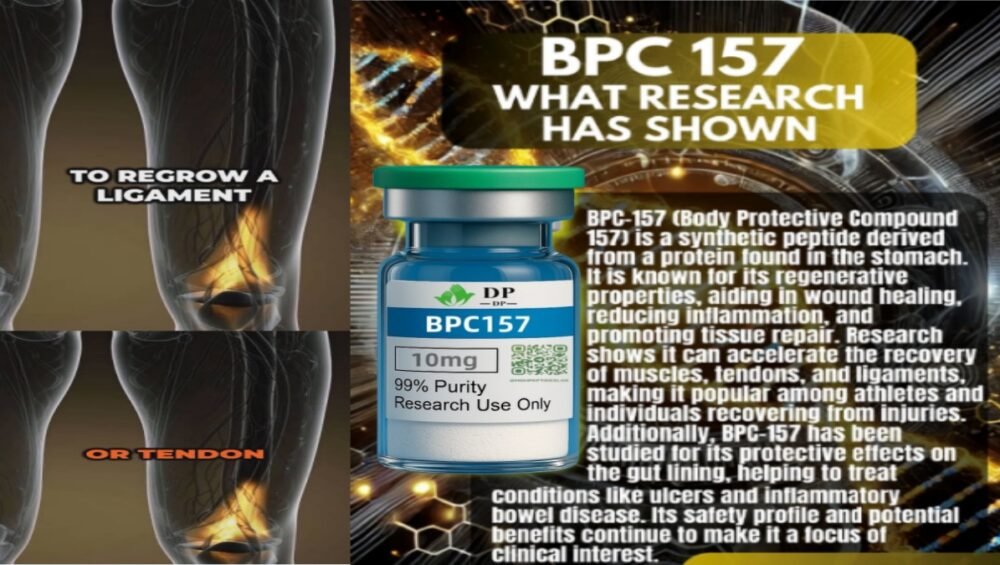
BPC-157 peptide guide — research uses, handling & buying tips — HGH Peptides Lab (China)

BPC-157 Peptide Guide: What It Is, Research Uses, Handling & Buying Tips

Intro

Need a straightforward overview of BPC-157 for research? This guide explains what it is, why readers discuss it for tissue recovery, and how to buy confidently. HGH Peptides Lab provides 99% purity · engineered in China · pharmaceutical-grade peptides with factory-direct pricing and dependable logistics.

Educational content for laboratory research only. Not for human consumption or medical use.


What Is BPC-157?

BPC-157 is a synthetic pentadecapeptide often referenced in models of tissue stability and recovery—frequently around tendon/ligament, joint & muscle, and GI mucosal contexts. It is commonly prepared as a white lyophilized powder per vial.

Research-Context Use Cases (Plain English)

  • Tendon & ligament frameworks — overuse/strain models and mobility routines.
  • Joint & muscle recovery — training load, micro-tears, post-exercise designs.
  • GI lining support — mucosal integrity / barrier balance discussions.
  • Skin/wound settings — local recovery and inflammation moderation topics.

How It’s Commonly Described (Quick Snapshot)

  • Context: often discussed alongside pathways involved in cell migration, micro-circulation, and remodeling frameworks.
  • Stack idea: readers sometimes pair BPC-157 with TB-500 for complementary soft-tissue themes.

Design & Handling Notes

  • Form: lyophilized research peptide, typically 5 mg or 10 mg per vial.
  • Storage: 2–8 °C, dry & dark; minimize freeze–thaw; protect from light/moisture.
  • Reconstitution: use a suitable diluent; let liquid run along the vial wall; avoid vigorous shaking.
  • Labeling: record molecule, mg/vial, date, volume prepared—keep procedures consistent.
  • Fulfillment: orders generally ship within three (3) business days with tracking.

Price & Buying Tips (Factory-Direct)

  1. Do the kit math: mg per vial × vials per kit → compare per-vial & per-kit price.
  2. Check strengths: commonly discussed 5 mg & 10 mg options.
  3. Packaging: secure inserts and tamper-evident seals for safe transit.
  4. Support: factory-direct channel for steady supply and responsive after-sales.

FAQs

Q1. What vial strengths are popular?
5 mg and 10 mg per vial are common for simple planning and inventory control.

Q2. Any stack recommendations?
Many readers explore TB-500 with BPC-157 for tendon/joint frameworks. See our dual-blend kit.

Q3. Lead time?
Orders generally dispatch within three business days with tracking.

Conclusion

BPC-157 offers a practical starting point for tissue-recovery research themes. If you need 99% purity, pharmaceutical-grade peptides with factory-direct pricing and fast fulfillment, explore our listings or contact us for bulk support.

Compliance

THIS PRODUCT IS INTENDED AS A RESEARCH CHEMICAL ONLY. ALL PRODUCTS ARE NOT LABELED.

Educational content only. Not medical advice.
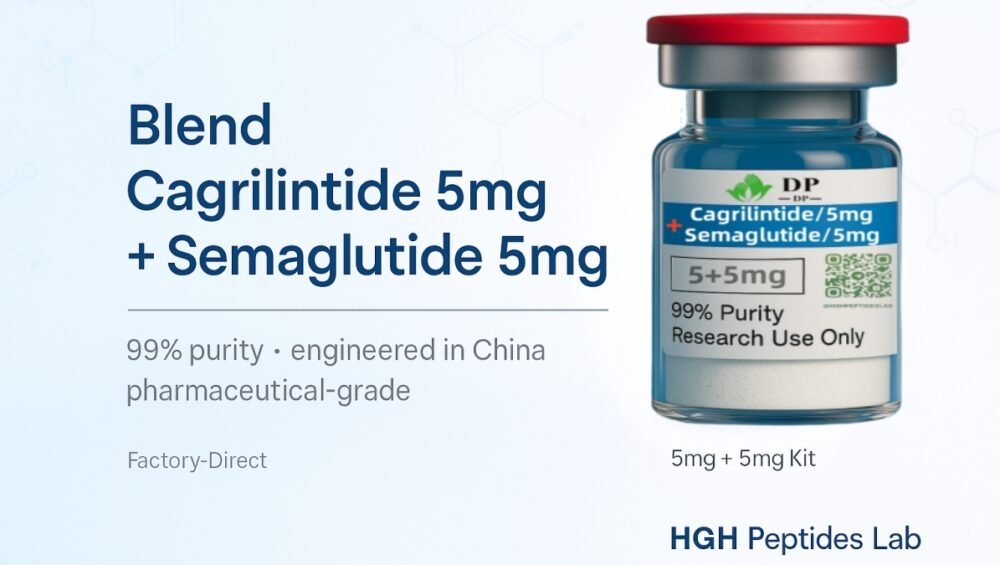
Blend Cagrilintide 5mg + Semaglutide 5mg — 99% purity, pharmaceutical-grade — HGH Peptides Lab (China)

Cagrilintide + Semaglutide (CagriSema) Guide: Mechanisms, Design Notes, Price & Buying Tips

Intro

Looking for a simple, effective GLP-1 + amylin combo for appetite/weight research? This guide explains the Cagrilintide + Semaglutide (CagriSema) blend in plain English—how it works, key design notes, and how to buy confidently. HGH Peptides Lab offers 99% purity · engineered in China · pharmaceutical-grade peptides with factory-direct pricing and reliable fulfillment.

Educational content for laboratory research only. Not for human consumption or medical use.


What Is CagriSema?

CagriSema pairs two complementary satiety pathways widely discussed in research models:

  • Semaglutide — a GLP-1 receptor agonist studied for slowing gastric emptying and amplifying gut–brain fullness signals.
  • Cagrilintide — a long-acting amylin analogue explored for reducing meal size/frequency and reinforcing satiety.

Why the combo? GLP-1 and amylin act via partially distinct circuits. Together they can target appetite from two angles (gastric emptying + central satiety), a frequent rationale behind blend designs.

Research-Context Use Cases (Plain English)

  • Appetite control & intake reduction models
  • Diet adherence over multi-week protocols
  • Body-weight & waist tracking paradigms
  • Post-prandial response / meal-size standardization exercises

How It Works (Quick Contrast)

ModelPathwayDesign Aim
Semaglutide onlyGLP-1Slow gastric emptying; enhance fullness
Cagrilintide onlyAmylinSmaller meals; fewer snacking events
CagriSema (GLP-1 + Amylin)DualAdditive satiety → stronger adherence

Design Notes (Formulation & Handling)

  • Form: lyophilized research peptide vials (e.g., 5 mg + 5 mg per kit)
  • Purity:99%; white/off-white lyophilized powder
  • Storage: 2–8 °C, dry & dark; minimize freeze–thaw
  • Reconstitution: use suitable diluent; let liquid run along vial wall; avoid vigorous shaking
  • Escalation: many projects model a gradual ramp to observe tolerability signals

Price & Buying Tips (Factory-Direct Checklist)

  1. Purity: 99% purity; stable lyophilization
  2. Manufacturing: GMP-style process controls; consistent kit counts
  3. Packaging: protective inserts; tamper-evident seals
  4. Factory-Direct: steady supply and pricing; responsive support
  5. Compare by math: mg per vial × vials per kit → per-vial/per-kit price
  6. Speed: generally ships within three (3) business days; tracking provided

Related Products (Internal Links)

FAQs

Q1. What kit format is popular?
Many buyers choose 10-vial kits (5 mg + 5 mg) for balanced inventory and cost efficiency.

Q2. Any tips to improve consistency in designs?
Standardize meal size/timing, hydration, and escalation steps; log your procedures and dates for reproducibility.

Q3. Lead time?
Orders generally dispatch within three business days with tracking.

Conclusion

CagriSema targets satiety via two complementary pathways, making it a practical template for appetite/weight research. If you need 99% purity, pharmaceutical-grade peptides with factory-direct pricing and dependable logistics, explore our listings or contact us for bulk support.

Compliance

THIS PRODUCT IS INTENDED AS A RESEARCH CHEMICAL ONLY. ALL PRODUCTS ARE NOT LABELED.

Educational content only. Not medical advice.
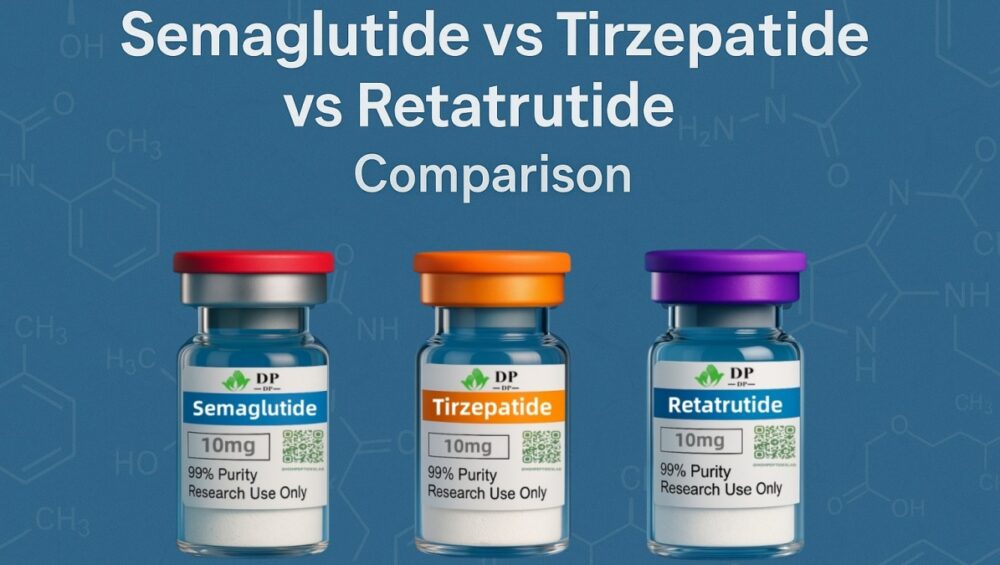
Semaglutide vs Tirzepatide vs Retatrutide – mechanism & buying comparison – HGH Peptides Lab

Semaglutide vs Tirzepatide vs Retatrutide: Mechanisms, Benefits, Price & Buying Tips

Semaglutide vs Tirzepatide vs Retatrutide — What’s the Difference?

In research discussions, Semaglutide is a GLP-1 receptor agonist, Tirzepatide is a dual GIP/GLP-1 agonist, and Retatrutide is often described as a triple agonist (GLP-1/GIP/Glucagon). Below is a practical, educational comparison.

Mechanism Snapshot

  • Semaglutide (GLP-1): appetite/satiety signaling and glycaemic-control context.
  • Tirzepatide (GIP/GLP-1): adds GIP incretin to GLP-1 for a broader incretin profile.
  • Retatrutide (GLP-1/GIP/Glucagon): introduces a third axis (glucagon) related to energy expenditure discussions.

Key Benefits Discussed (Research Context)

  • Weight-management models: appetite control and energy-balance frameworks.
  • Glycaemic support context: high-level talk around glucose-handling pathways.
  • Choice drivers: single vs dual vs triple-pathway breadth; goals, availability and cost.

Basic Handling & Storage

  • Form: typically white lyophilized powder per vial.
  • Keep sealed 2–8 °C: protect from light/moisture; follow local lab SOPs.
  • Reconstitution: use suitable diluent, swirl gently along the vial wall.
  • After reconstitution: refrigerate and use promptly per procedure.

Potential Side Considerations (Overview)

  • GI discomfort (nausea/fullness) is noted in source discussions with incretin-pathway work.
  • Avoid unsupervised stacking; endocrine-axis protocols can be sensitive.

Disclaimer: Informational overview only; not medical advice.

Price & Buying Tips (Factory-Direct Perspective)

  • Kit math: confirm vials per kit and mg per vial; compare unit price per vial/kit.
  • Logistics: ask lead times, packaging/cold-chain, and after-sales support.
  • Factory-direct: fewer middle layers, clearer communication.

Quick Comparison (At a Glance)

  • Semaglutide: GLP-1 focus; widely discussed for appetite/satiety.
  • Tirzepatide: GIP/GLP-1 dual incretin; often compared on price/availability vs semaglutide.
  • Retatrutide: GLP-1/GIP/Glucagon triple approach; readers weigh breadth vs cost/support.

Educational content only. This article is intended for general reading and does not provide medical advice.

Retatrutide triple-agonist peptide – benefits, dosage & buying guide – HGH Peptides Lab

Retatrutide (GLP-1/GIP/Glucagon) Guide: Benefits, Dosage, Price & Buying Tips

What Is Retatrutide (GLP-1/GIP/Glucagon)?

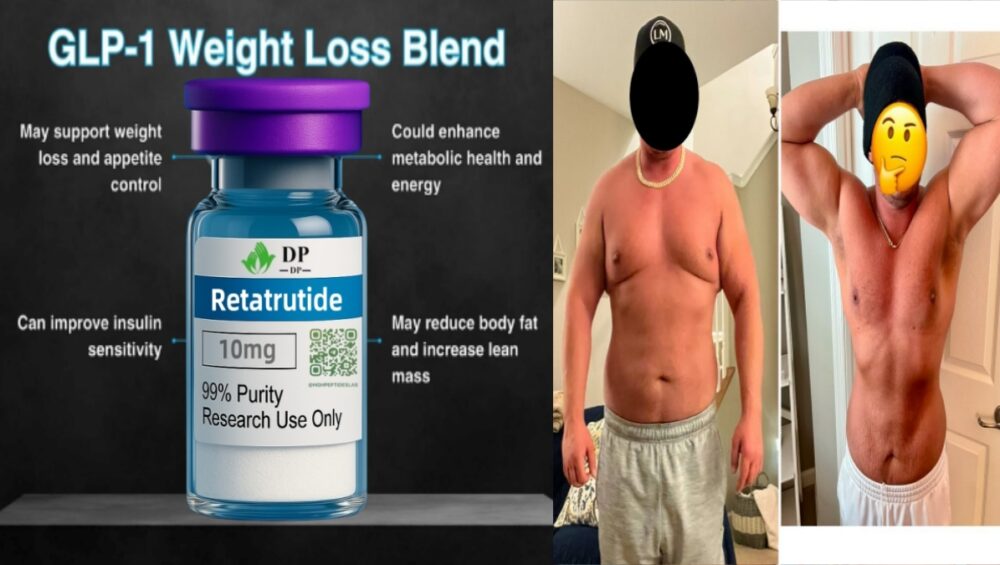
Retatrutide is commonly discussed as a triple agonist acting on GLP-1, GIP and glucagon receptors in research contexts, especially around body-weight and metabolic signaling models. This guide is for educational reading only.

Incretin 101: GLP-1, GIP & Glucagon — Where Retatrutide Fits

  • GLP-1 receptor: appetite/satiety & glycaemic control discussions.
  • GIP receptor: complementary incretin signaling reported in literature.
  • Glucagon receptor: adds energy-expenditure & metabolic-rate angles in research talk.

Benefits Commonly Referenced (Research Context)

  • Weight-management models: triple-pathway appetite & energy-balance discussions.
  • Glycaemic support context: high-level talk on glucose control frameworks.
  • Comparison use: frequently contrasted with semaglutide (GLP-1) and tirzepatide (GIP/GLP-1).

Basic Handling & Storage

  • Form: typically supplied as a white lyophilized powder per vial.
  • Keep sealed at 2–8 °C: protect from light and moisture; follow local lab SOPs.
  • Reconstitution: use a suitable diluent; swirl gently along the vial wall; avoid vigorous shaking.
  • After reconstitution: refrigerate and use promptly per procedure.

Potential Side Considerations (Overview)

  • GI discomfort (nausea/fullness) appears in source notes with incretin-pathway compounds.
  • General caution: avoid unsupervised stacking; endocrine-axis work can be sensitive.

Disclaimer: Informational overview only; not medical advice.

Retatrutide vs Tirzepatide vs Semaglutide

  • Semaglutide (GLP-1): single incretin receptor agonist; often discussed for appetite/satiety.
  • Tirzepatide (GIP/GLP-1): dual incretin approach; price/availability frequently compared.
  • Retatrutide (GLP-1/GIP/Glucagon): triple-agonist reports; readers weigh breadth of signaling vs cost/support.

Price & Buying Tips (Factory-Direct Perspective)

  • Check kit details: vials per kit, stated mg per vial; confirm what’s included.
  • Compare unit price: per kit & per-vial math to see actual differences.
  • Ask logistics: lead time, packaging, cold-chain and after-sales support.
  • Factory-direct sourcing: can streamline communication and reduce middle-layer costs.

Educational content only. This article is intended for general reading and does not provide medical advice.

Semaglutide GLP-1 research guide – HGH Peptides Lab

Semaglutide (GLP-1) Guide: Benefits, Dosage, Price & Buying Tips

What Is Semaglutide (GLP-1)?

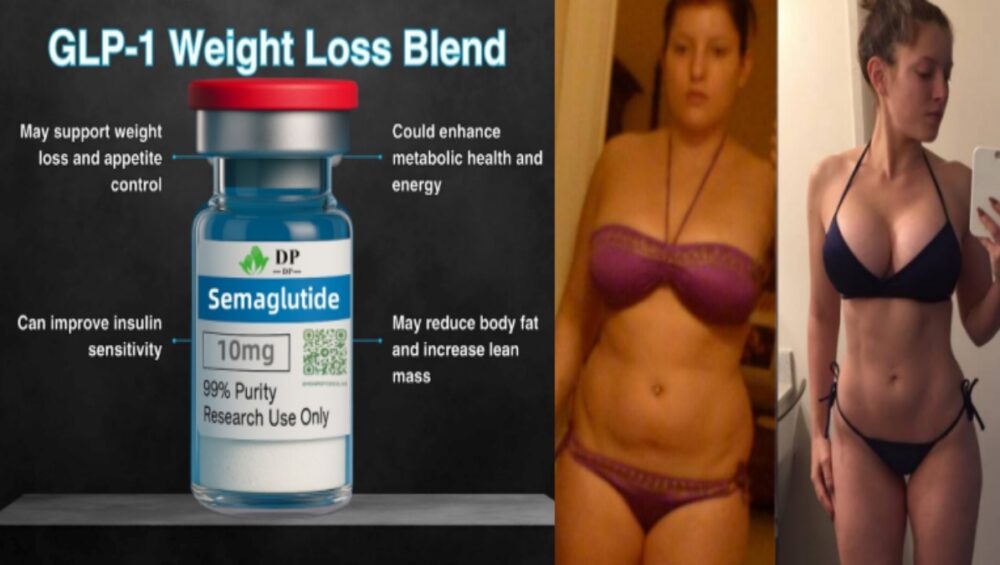
Semaglutide is a GLP-1 receptor agonist widely referenced in research on appetite control, glycaemic regulation, and weight-management frameworks. This guide summarizes mechanism basics, common benefits noted in the literature, storage/handling notes, and a comparison with tirzepatide and retatrutide. Educational content only.

Incretin 101: GLP-1, GIP & Where Semaglutide Fits

  • GLP-1 receptor: appetite/satiety signaling, delayed gastric emptying, and glucose-dependent insulin support.
  • GIP receptor: a separate incretin pathway (covered together with GLP-1 by tirzepatide).
  • Reference points: Semaglutide = GLP-1 single agonist; Tirzepatide = dual GIP/GLP-1; Retatrutide = triple GLP-1/GIP/Glucagon.

Note: GLP-2 is a different gut-trophic pathway (e.g., teduglutide), not a target of semaglutide.

Benefits Commonly Referenced in Research

  • Appetite regulation and energy-intake modulation models
  • Weight-management contexts
  • Glycaemic support via glucose-dependent insulin signaling

Basic Handling & Storage

  • Typically supplied as a white lyophilized powder.
  • Keep sealed at 2–8 °C, protected from light/moisture; follow your lab’s SOPs.
  • Use reconstituted solutions promptly per protocol.

Potential Side Considerations (Literature Overview)

  • GI discomfort (nausea, fullness) frequently mentioned.
  • Appetite reduction/satiety may be pronounced in some designs.
  • Avoid unsupervised stacking or protocol mixing without approvals.

Disclaimer: Informational overview only. Not medical advice.

Semaglutide vs Tirzepatide vs Retatrutide

  • Semaglutide (GLP-1): focused GLP-1 signaling.
  • Tirzepatide (GIP/GLP-1): dual incretin coverage, broader scope.
  • Retatrutide (GLP-1/GIP/Glucagon): adds glucagon receptor for energy-expenditure angle.

Choice depends on whether the study favors single incretin targeting, dual coverage, or triple-pathway exploration.

Buying Tips (Factory-Direct Perspective)

  • Check purity specs and batch documentation availability.
  • Compare unit price per kit and strengths per vial.
  • Ask about lead times, packaging, and after-sales support.
  • Factory-direct sourcing can reduce middle-layer costs and speed up communication.

Educational content only. This article does not provide medical advice.

Tirzepatide GIP/GLP-1 research guide – HGH Peptides Lab

Tirzepatide (GIP/GLP-1) Guide: Benefits, Dosage, Price & Buying Tips

What Is Tirzepatide (GIP/GLP-1)?

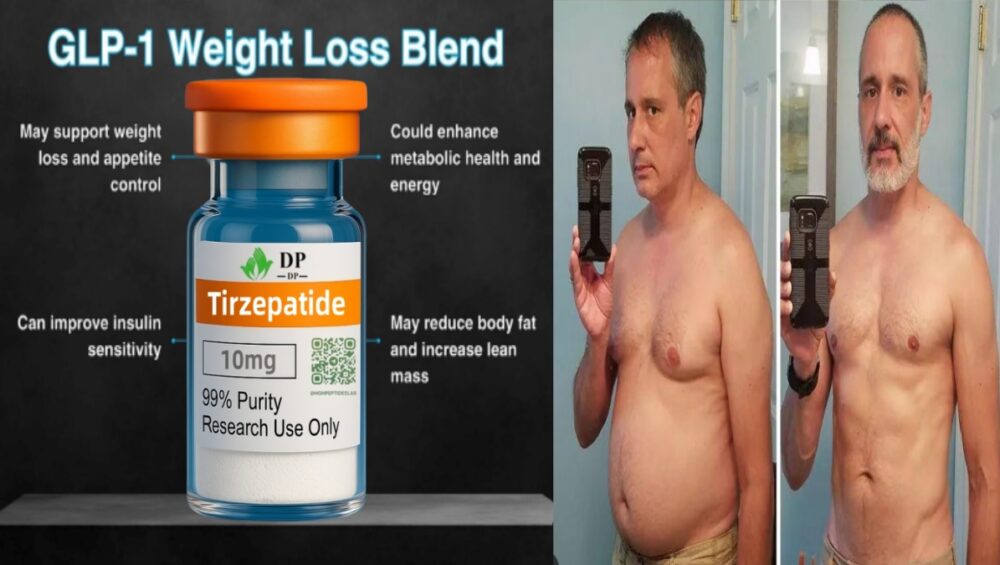
Tirzepatide is a dual incretin agonist that targets both GIP and GLP-1 receptors. It is often discussed in research for appetite regulation, glucose-dependent insulin signaling, and weight-management frameworks. This guide condenses mechanism basics, benefits frequently referenced in the literature, storage/handling notes, and a comparison with semaglutide and retatrutide. Educational content only.

Incretin 101: GLP-1, GIP & Where Tirzepatide Fits

  • GLP-1 receptor: appetite/satiety signaling, delayed gastric emptying, glucose-dependent insulin support.
  • GIP receptor: complements GLP-1 in incretin biology; combined targeting may broaden metabolic effects.
  • Reference points: Semaglutide = GLP-1 single agonist; Tirzepatide = dual GIP/GLP-1; Retatrutide = triple GLP-1/GIP/Glucagon.

Note: GLP-2 is a different gut-trophic pathway (e.g., teduglutide), not the target of tirzepatide.

Benefits Commonly Referenced in Research

  • Appetite control and energy-intake modulation models
  • Weight-management study designs
  • Glycaemic support context via glucose-dependent insulin signaling

Basic Handling & Storage

  • Typically supplied as a white lyophilized powder.
  • Keep sealed at 2–8 °C, protected from light/moisture; follow your lab’s SOPs.
  • Use reconstituted solutions promptly per protocol.

Potential Side Considerations (Literature Overview)

  • GI discomfort (nausea, fullness) is frequently mentioned.
  • Appetite reduction/satiety may be pronounced in some designs.
  • Avoid unsupervised stacking without appropriate approvals.

Disclaimer: Informational overview only. Not medical advice.

Tirzepatide vs Semaglutide vs Retatrutide

  • Semaglutide (GLP-1): focused GLP-1 signaling.
  • Tirzepatide (GIP/GLP-1): combined incretin coverage, broader scope.
  • Retatrutide (GLP-1/GIP/Glucagon): adds energy-expenditure angle via glucagon receptor.

Selection depends on whether the study favors single incretin targeting, dual coverage, or triple-pathway exploration.

Buying Tips (Factory-Direct Perspective)

  • Check purity specs and batch documentation availability.
  • Compare unit pricing per kit and strengths per vial.
  • Ask about lead times, packaging, and support.
  • Factory-direct sourcing can shorten communication loops and reduce middle-layer costs.

Educational content only. This article does not provide medical advice.

en_USEN
Select the fields to be shown. Others will be hidden. Drag and drop to rearrange the order.
  • Image
  • SKU
  • Rating
  • Price
  • Stock
  • Availability
  • Add to cart
  • Description
  • Content
  • Weight
  • Dimensions
  • Additional information
Click outside to hide the comparison bar
Compare
📞 Contact Us
Shopping cart close